
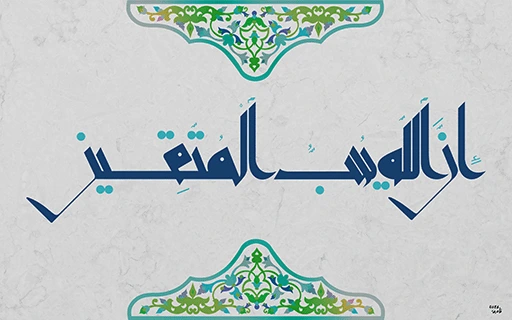
Human beings pass through many stages in life. At times, the doors of ease and tranquility open widely before them; at other times, they encounter difficult circumstances that call for patience, hope, and turning toward God.
The Qur’an presents human beings, throughout these different stages, with an integrated framework of meanings: supplication, God-consciousness, patience, righteousness, giving, reliance upon God, hope, and righteous action.
Among the verses that open a broad perspective on this subject is the saying of God:
“Or, who responds to the distressed one when he calls upon Him, removes the harm, and makes you successors upon the earth? Is there a god alongside God? Little do you remember.”
Qur’an, An-Naml 27:62
The verse brings together supplication, the removal of harm, and human succession upon the earth, placing these meanings within a context that emphasizes God’s power and His oneness.
From here, this study sets out to reflect upon the meaning of the removal of harm (كشف السوء) and its relationship with God-consciousness, patience, supplication, righteousness, and giving. It also pauses to consider examples from the trials experienced by the prophets, peace be upon them, before turning to the stage that follows hardship: the stage of ease and the continuation of the human mission on earth through acts of goodness.
 Part One: The Removal of Harm in Surah 27 : An-Naml : Divine Oneness and God’s Power in Creation, Provision, Guidance, and the Removal of Harm
Verses 60 to 64 of Surah An-Naml form a continuous sequence presenting remarkable manifestations of God’s power and governance.
The sequence begins with His saying:
“Or, who created the heavens and the earth and sent down for you water from the sky, and by it We caused gardens of beauty to grow? You could not have caused their trees to grow. Is there a god alongside God? Rather, they are a people who turn away from the truth.”
Qur’an, An-Naml 27:60
Then God says:
“Or, who made the earth a place of settlement, placed rivers throughout it, set firm mountains upon it, and placed a barrier between the two seas? Is there a god alongside God? Rather, most of them do not know.”
Qur’an, An-Naml 27:61
The sequence then reaches a point of particular importance for our study:
“Or, who responds to the distressed one when he calls upon Him, removes the harm, and makes you successors upon the earth? Is there a god alongside God? Little do you remember.”
Qur’an, An-Naml 27:62
The context then continues:
“Or, who guides you through the darknesses of land and sea, and who sends the winds as good tidings before His mercy? Is there a god alongside God? Exalted is God above what they associate with Him.”
Qur’an, An-Naml 27:63
The sequence concludes with:
“Or, who originates creation and then brings it back, and who provides you from heaven and earth? Is there a god alongside God? Say: ‘Bring forth your proof, if you are truthful.’”
Qur’an, An-Naml 27:64
 Pure Devotion to God as the Foundation of This Context
The expression “Is there a god alongside God?” (أَإِلَٰهٌ مَّعَ اللَّهِ) is repeated throughout these verses. This repetition reveals a central theme connecting all of them: affirming the oneness of God and recognizing Him alone as worthy of worship.
God reminds human beings of great manifestations of His power and governance: He created the heavens and the earth, sent down water, caused gardens to grow, made the earth a place of settlement, caused rivers to flow, established mountains, placed a barrier between the two seas, responds to the distressed, removes harm, guides through the darknesses of land and sea, sends the winds, originates creation and brings it back, and provides from heaven and earth.
After mentioning all these acts comes the Qur’anic question:
“Is there a god alongside God?”
Thus, the verses direct human beings toward a profound truth: these acts are manifestations of God’s lordship, power, and governance. Therefore, worship, supplication, and hope are to be directed to Him alone.
The verse concerning the removal of harm therefore appears at the heart of a Qur’anic context that emphasizes pure devotion to God. Hope for the removal of harm is consequently connected with turning toward God alone.
The Distressed One and Supplication
God says:
“Or, who responds to the distressed one when he calls upon Him?”
The verse presents supplication as a sincere turning toward God, followed by:
“and removes the harm.”
A clear relationship therefore emerges between distress, supplication, response, and the removal of harm.
Supplication thus becomes a doorway to hope and trust in God.
The Removal of Harm and Succession upon the Earth
One of the most beautiful aspects of this sequence in Surah An-Naml is that it does not stop at:
“and removes the harm”
but continues:
“and makes you successors upon the earth.”
This transition is extremely important for understanding our subject.
The removal of harm opens before a human being the possibility of continuing life and fulfilling responsibility. Ease therefore becomes a field for action, provision becomes an opportunity for giving, ability becomes an opportunity for reform, and life becomes a field for doing good.
 Part Two: Trial, Supplication, and Patience — Examples from the Lives of the Prophets, Peace Be Upon Them
The stories of the prophets offer us profound examples of how to face hardship and trial. They show that the finest among human beings passed through stages that required supplication, patience, turning back to God, and hope.
Job (Ayyoub) — Peace Be Upon Him: Supplication and the Removal of Affliction
God says:
“And Job, when he called upon his Lord: ‘Indeed, harm has touched me, and You are the Most Merciful of the merciful.’ So We responded to him and removed the affliction that had touched him, and We gave him his family and the like of them with them, as a mercy from Us and a reminder for those devoted to worship.”
Qur’an, Al-Anbiya 21:83–84
Here we find a succession of meanings: supplication, response, removal of affliction, mercy, and giving.
Jonah — Peace Be Upon Him: Supplication and Deliverance
God says:
“…Then he called out in the darknesses: ‘There is no god but You. Glory be to You! Indeed, I was among the wrongdoers.’ So We responded to him and saved him from distress. And thus We save the believers.”
Qur’an, Al-Anbiya 21:87–88
Here, supplication, divine oneness, response, and deliverance come together within a single context.
Solomon — Peace Be Upon Him: Trial and Turning Back to God
God says:
“And We certainly tested Solomon and placed upon his throne a body; then he turned back. He said: ‘My Lord, forgive me and grant me a kingdom…’”
Qur’an, Sad 38:34–35
Then He says:
“So We subjected the wind to him…”
Qur’an, Sad 38:36
These verses bring together the meanings of trial, turning back to God, supplication, and then the opening of new avenues of divine giving.
Jacob — Peace Be Upon Him: Patience, Hope, and Endeavor
God says:
“So beautiful patience.”
Qur’an, Yusuf 12:18
And He says in verse 87 of the same surah:
“Go and seek information about Joseph and his brother, and do not despair of God’s relief.”
Qur’an, Yusuf 12:87
In these two verses, patience meets hope and active endeavor.
Beautiful patience gives a person steadfastness; hope in God opens the doors of possibility; and endeavor enables the person to continue acting on the path toward relief.
 Acceptance of God’s Governance While Continuing Responsibility and Action
God says:
“He is not questioned about what He does, but they will be questioned.”
Qur’an, Al-Anbiya 21:23
This verse places human beings before a profound reality: God is the All-Knowing and the One who governs all affairs, while human beings live within the limits of their knowledge and ability.
Human beings do not know the unseen, nor can they encompass what the future holds in terms of events, opportunities, and decrees, whereas God’s knowledge encompasses everything.
God says:
“God knows, while you do not know.”
Qur’an, Al-Baqarah 2:216
From this perspective, a human being can accept God’s governance, entrust his affairs to his Lord, and live through the different stages of life with a heart that relies upon God and hopes for His mercy.
Acceptance of God’s governance is fully compatible with continuing one’s responsibility. A human being remains responsible for his actions and choices; therefore, his responsibility continues throughout every stage of his life.
Thus, human life brings together: acceptance of God’s governance, supplication, patience, God-consciousness, and action.
Part Three: God-Consciousness, Patience, Righteousness, and Giving — An Integrated Path for Continuing the Journey of Goodness
God-consciousness (التقوى) in the Qur’an is not an isolated concept separate from human life. Its effects appear in a person’s behavior, actions, and relationship with others.

God describes the God-conscious at the beginning of Surah Al-Baqarah:
“Those who believe in the unseen, establish prayer, and spend from what We have provided for them.”
Qur’an, Al-Baqarah 2:3
Then:
“And those who believe in what has been sent down to you…”
“and of the Hereafter they are certain.”
Qur’an, Al-Baqarah 2:4
Here we see a beautiful relationship between God-consciousness, prayer, and giving.
God-Consciousness and Discernment
God says:
“If you are mindful of God, He will grant you a criterion.”
Qur’an, Al-Anfal 8:29
God-consciousness grants a person furqan — a criterion or capacity for discernment — enabling him to distinguish clearly and find guidance in his choices.
God-Consciousness as a Quality Loved by God
God says:
“Indeed, God loves the God-conscious”
Qur’an, At-Tawbah 9:4 and 9:7
These verses carry a profound meaning for our study, because God-consciousness is not only a path toward relief and ease; it is also a quality that God Himself loves.
Who, then, are the God-conscious?
They are those who place a protective barrier between themselves and what displeases God. They hold Him in awe, remain conscious of their responsibility before Him, strive to obey Him and act in ways that please Him, and refrain from what He has prohibited.
The Qur’an repeatedly calls human beings to God-consciousness. Among these verses is:
“And be mindful of a Day when you will be returned to God. Then every soul will be paid in full for what it has earned, and they will not be wronged.”
Qur’an, Al-Baqarah 2:281
This particular verse is especially important because it connects God-consciousness with the Day on which human beings return to God and with their responsibility for their actions.
God-consciousness in the Qur’an is also connected with awe of God, as in His saying:
“And be mindful of Me alone.”
Qur’an, Al-Baqarah 2:41
And:
“And be mindful of Me, O people of understanding.”
Qur’an, Al-Baqarah 2:197
From this, we can understand taqwa as a continuous awareness of the human being’s relationship with his Lord, awe of Him, concern for what pleases Him, and uprightness in word and action.
God-consciousness is therefore not merely an inner feeling. It becomes visible in human life through prayer, giving, righteousness, patience, and righteous action.
Here we see a remarkably integrated image of the God-conscious person: faith, prayer, giving, certainty, guidance, and success.
God has promised those who are mindful of Him in Surah At-Talaq:
“Whoever is mindful of God, He will make for him a way out, and provide for him from where he does not expect.”
Qur’an, At-Talaq 65:2–3
God-consciousness is not merely a word; it is a way of life. This is why the promise of a way out and provision follows it.
God-Consciousness, Guidance, and Human Responsibility Before Allah
The concept of the God-conscious (al-muttaqīn) in the Qur’an goes beyond belonging to a particular people, tribe, or group. Allah تعالى says in Surah 49 : Al-Hujurāt, verse 13, addressing all people:
﴿يَا أَيُّهَا النَّاسُ إِنَّا خَلَقْنَاكُم مِّن ذَكَرٍ وَأُنثَىٰ وَجَعَلْنَاكُمْ شُعُوبًا وَقَبَائِلَ لِتَعَارَفُوا ۚ إِنَّ أَكْرَمَكُمْ عِندَ اللَّهِ أَتْقَاكُمْ﴾
“O humanity! We created you from a male and a female, and We made you into peoples and tribes so that you may come to know one another. Surely, the most noble of you in the sight of Allah is the most God-conscious.”
The verse then concludes:
﴿إِنَّ اللَّهَ عَلِيمٌ خَبِيرٌ﴾
“Surely, Allah is All-Knowing, All-Aware.”
Allah alone knows the true reality of each person’s God-consciousness. He knows what guidance has reached each person, what they have understood of the truth, and how they have responded to what they have come to know and what has reached them. Therefore, judgment concerning the true God-consciousness and guidance of people belongs to Allah, the All-Knowing, the All-Aware.
The Qur’an also states:
﴿وَمَا كُنَّا مُعَذِّبِينَ حَتَّىٰ نَبْعَثَ رَسُولًا﴾
“We never punish until We have sent a messenger.”
Surah 17 : Al-Isrā’, verse 15
This shows that human responsibility before Allah is connected to what has reached a person of the message and guidance. Allah judges His faithful with His knowledge and justice, and He knows the circumstances of every human being and what has reached them of clarification and guidance.
From this, we understand that God-consciousness is a response to the guidance that reaches a person. Whenever a person comes to know something of Allah’s command, that knowledge becomes a trust and a responsibility. Their God-consciousness is then expressed through their response to the truth, as well as through their actions and character.
As for a person to whom the message of the Qur’an has not reached, it is not for us to pass judgment on their ultimate destiny or to determine how they will be judged; that belongs to Allah’s knowledge alone. Within the limits of what these verses allow us to affirm, we can say that Allah wrongs no one and that His judgment is founded upon knowledge and justice.
This is consistent with His words:
﴿وَلَا يَظْلِمُ رَبُّكَ أَحَدًا﴾
“And your Lord does not wrong anyone.”
Surah 18 : Al-Kahf, verse 49
Patience and Righteousness
God says:
“And those who are patient in poverty, hardship, and in times of battle — those are the ones who have been true, and those are the God-conscious.”
Qur’an, Al-Baqarah 2:177
This verse brings righteousness, patience, and God-consciousness together within a single framework.
God also says:
“Indeed, those who are patient will be given their reward without measure.”
Qur’an, Az-Zumar 39:10
Patience is therefore a strength that enables a person to continue the journey, and it provides a broad field for steadfastness, action, and hope.
Giving for the Sake of God and Caring for Human Beings
Giving occupies a prominent place in the Qur’an.
God says concerning those who give:
“Those who spend their wealth by night and by day, secretly and openly, will have their reward with their Lord. They shall have no fear, nor will they grieve.”
Qur’an, Al-Baqarah 2:274
The verse presents a beautiful image of continuous giving: by night and by day, secretly and openly.
God says:
“You will never attain righteousness until you spend from what you love.”
Qur’an, Al Imran 3:92
Here, giving is directly connected with righteousness.
God also says, describing the righteous:
“And they give food, despite loving it, to the needy, the orphan, and the captive of war. ‘We feed you only for the sake of God; we seek from you neither reward nor thanks.’”
Qur’an, Al-Insan 76:8–9
In this verse, giving appears in the form of feeding, care, and mercy.
The Qur’an also mentions clothing those in need in the context of expiation for an oath:
“Its expiation is to feed ten needy people with the average of what you feed your families, or to clothe them…”
Qur’an, Al-Ma’idah 5:89
Thus, giving appears in various forms of caring for human beings and meeting their needs: money, food, clothing, assistance, as well as the many other forms of righteousness, kindness, and reform.
Giving and Its Relationship with the Removal of Harm
A person who is experiencing hardship may hope that God will remove the harm from him. Another human being, meanwhile, can become one of the means through which goodness reaches someone in need.
The removal of harm from a person may take the form of food reaching him, clothing that he needs, money that supports him, or assistance that eases one of life’s burdens.
In this way, a human being, through the provision and ability God has given him, becomes a means of goodness in the lives of others.
This idea connects with God’s saying:
“And removes the harm, and makes you successors upon the earth.”
God is the One who removes harm, while human beings carry responsibility upon the earth. Among the forms of this responsibility are giving, care, and reform.
Part Four : God-Consciousness, the Way Out, Provision, and Ease
God says:
“Whoever is mindful of God, He will make for him a way out, and provide for him from where he does not expect.”
Qur’an, At-Talaq 65:2–3
Then He says:
“Whoever is mindful of God, He will make ease for him in his affairs.”
Qur’an, At-Talaq 65:4
These verses establish a clear relationship between God-consciousness, a way out, provision, and ease.
A person can make God-consciousness a way of life, trust in God’s promise, and continue his work and endeavor.
These verses therefore become among the strongest verses bringing together the themes of God-consciousness and the removal of harm.
Part Five: After the Removal of Harm — A Better Life and the Continuation of the Human Mission on Earth
One of the most important conclusions we have reached is that the removal of harm represents an opening into a new stage.
After hardship has been lifted, a human being can continue his mission on earth, making ease a field for action, provision an opportunity for giving, and ability an opportunity for reform.
This meaning is consistent with the sequence of verse 62 of Surah An-Naml:
“And He removes the harm, and makes you successors upon the earth.”
After the removal of harm comes the mention of succession upon the earth.
This invites us to reflect upon the possibility that life, after the trial has passed, can become more beautiful and offer a wider field for goodness.
The human being continues in righteousness, giving, feeding those in need, reforming, performing righteous deeds, and doing good.
And thus, the mission continues.