
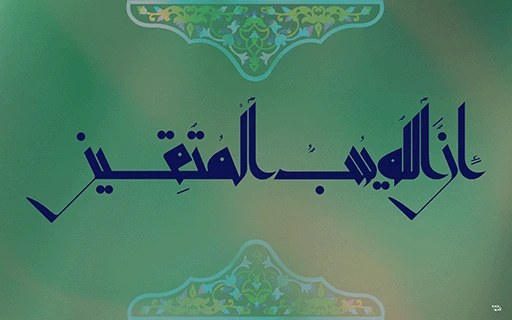
Note : In this study, the term “piety” is used as a translation of التَّقْوَى (taqwā) in its broad Qur’anic sense, and not in the narrow sense of mere religious devotion. Likewise, the term “pious,” used to translate الْمُتَّقِينَ (al-muttaqīn), does not simply refer to devout people, but to those who put piety into practice in their lives, turning toward what is good and protecting themselves from what is harmful or evil.
Tattaqū (تَتَّقُوا) also expresses the idea of protecting oneself, safeguarding oneself, and being mindful of what may be harmful or lead to evil. According to the Qur’anic context, it may therefore be manifested through vigilance, avoiding evil, and doing good.
🟣Introduction
Piety is one of the central concepts of the Qur’an. It is mentioned in numerous passages and is connected with guidance, worship, ethics, human relationships, salvation, and recompense.
From a linguistic perspective, the term التَّقْوَى (at-taqwā) derives from the Arabic root وَقِيَ, which fundamentally conveys the idea of protection and preservation, as well as taking the necessary measures to guard oneself against what may be harmful or lead to evil.
Although the term occurs frequently in the Qur’an, piety does not seem to be limited to one single and simple meaning. The Qur’an presents it through different dimensions: protecting oneself from what displeases God, protection from the Fire, turning away from evil, doing good, supporting one another in goodness and piety, and maintaining vigilance in human conduct and choices.
The Qur’an also speaks of the pious, to whom God grants guidance, success, and salvation. It shows that piety accompanies the human being in their relationship with God, with others, and with themselves. It also constitutes a criterion of dignity among human beings:
“Indeed, the most honored of you in the sight of God is the most pious of you.”
(Qur’an, 49:13)
Thus, studying piety in the Qur’an leads us beyond an understanding restricted to religious devotion alone. Through the diversity of the verses that address it, taqwā (piety) appears as a comprehensive orientation of the human being: protecting oneself from evil, turning away from what displeases God, doing good, and moving forward in righteousness.
It is from this perspective that we will seek to understand how piety becomes, in the Qur’an, a path toward salvation.
🟢Chapter One: The Concept of Piety — Some Meanings and Actions Related to It in the Book of God
🟠Piety and the Foundation of Guidance
The Qur’an begins Sūrah 2, Al-Baqara, with these words:
﴿الٓمٓ ذَٰلِكَ الْكِتَابُ لَا رَيْبَ فِيهِ هُدًى لِّلْمُتَّقِينَ﴾
“Alif, Lām, Mīm. This is the Book in which there is no doubt, a guidance for the pious.”
Then He describes the pious:
﴿الَّذِينَ يُؤْمِنُونَ بِالْغَيْبِ وَيُقِيمُونَ الصَّلَاةَ وَمِمَّا رَزَقْنَاهُمْ يُنفِقُونَ وَالَّذِينَ يُؤْمِنُونَ بِمَا أُنزِلَ إِلَيْكَ وَمَا أُنزِلَ مِن قَبْلِكَ وَبِالْآخِرَةِ هُمْ يُوقِنُونَ﴾
“Those who believe in the unseen, establish the prayer, and spend from what We have provided them; and those who believe in what has been sent down to you and what was sent down before you, and who have certainty in the Hereafter.”
Sūrah 2: Al-Baqara, verses 3–4.
Then God says in verse 5:
﴿أُولَٰئِكَ عَلَىٰ هُدًى مِّن رَّبِّهِمْ وَأُولَٰئِكَ هُمُ الْمُفْلِحُونَ﴾
“Those are upon guidance from their Lord, and those are the successful.”
These verses present a particularly important picture.
Piety is not simply a word used to designate a category of people. It appears through a set of qualities and actions:
🔹believing in the unseen;
🔹establishing the prayer;
🔹spending from what God has provided;
🔹believing in what has been revealed;
🔹believing in what was revealed previously;
🔹having certainty in the Hereafter.
The result is guidance and success.
From the very beginning of the Qur’an, piety is therefore connected with the way human beings receive guidance and act according to it.
The Qur’an is not merely a Book that one reads: it becomes a guidance for the one whose being is receptive to it and who acts according to what it indicates.
🟠Piety and Human Dignity
Among the most important verses concerning piety is verse 13 of Sūrah 49, Al-Hujurāt:
﴿يَا أَيُّهَا النَّاسُ إِنَّا خَلَقْنَاكُم مِّن ذَكَرٍ وَأُنثَىٰ وَجَعَلْنَاكُمْ شُعُوبًا وَقَبَائِلَ لِتَعَارَفُوا ۚ إِنَّ أَكْرَمَكُمْ عِندَ اللَّهِ أَتْقَاكُمْ﴾
“O humankind! We have created you from a male and a female, and We have made you peoples and tribes so that you may know one another. Surely, the most honored of you in the sight of God is the most pious among you. God is All-Knowing, All-Aware.”
The verse begins with a universal address:
﴿يَا أَيُّهَا النَّاسُ﴾
“O humankind!”
It then recalls the common human origin:
﴿إِنَّا خَلَقْنَاكُم مِّن ذَكَرٍ وَأُنثَىٰ﴾
“We have created you from a male and a female.”
Then it refers to diversity:
﴿وَجَعَلْنَاكُمْ شُعُوبًا وَقَبَائِلَ﴾
“and We have made you peoples and tribes.”
The purpose mentioned is:
﴿لِتَعَارَفُوا﴾
“so that you may know one another.”
Then comes the criterion of dignity:
﴿إِنَّ أَكْرَمَكُمْ عِندَ اللَّهِ أَتْقَاكُمْ﴾
“Surely, the most honored of you in the sight of God is the most pious among you.”
The verse therefore does not make sex, ancestry, or tribal affiliation a criterion of dignity before God. It establishes piety as the criterion.
This is one of the strongest passages showing that piety is a human value that transcends outward affiliations.
As for mutual knowledge among peoples and tribes, it opens a broad space for dialogue, cooperation, reciprocal learning, and the exchange of experiences. Mutual knowledge among peoples also contributes to strengthening security and peace in the world.
🟠Piety and Protection
Among the passages that reveal a dimension of the meaning of piety, God says:
﴿فَإِن لَّمْ تَفْعَلُوا۟ وَلَن تَفْعَلُوا۟ فَٱتَّقُوا۟ ٱلنَّارَ ٱلَّتِى وَقُودُهَا ٱلنَّاسُ وَٱلْحِجَارَةُ ۖ أُعِدَّتْ لِلْكَـٰفِرِينَ﴾
“But if you do not do so—and you will never do so—then protect yourselves from the Fire whose fuel is people and stones, prepared for the disbelievers.”
Sūrah 2: Al-Baqara, verse 24.
Here, the verb “protect yourselves” is directly associated with the Fire.
This highlights the meaning of protection, preservation, and keeping away from the cause that leads to perdition.
Piety can thus be understood as a practical attitude: a human being adopts a way of acting that protects them from a harmful consequence.
This meaning is also connected with the expression:
﴿وَاتَّقُوا اللَّهَ﴾
“And take God as your protection.”
Taking God as one’s protection means that the human being follows a path that protects them from the displeasure and punishment of God, by obeying Him and avoiding what He has forbidden.
The relationship between piety and keeping away from evil also appears in the words of God:
﴿وَتَعَاوَنُوا عَلَى الْبِرِّ وَالتَّقْوَى وَلَا تَعَاوَنُوا عَلَى الْإِثْمِ وَالْعُدْوَانِ ۚ وَاتَّقُوا اللَّهَ﴾
“And cooperate in goodness and piety, and do not cooperate in sin and transgression. And protect yourselves from what displeases God.”
Sūrah 5: Al-Mā’ida, verse 2.
Here we find a clear contrast:
goodness and piety
versus:
sin and transgression.
This confirms that piety is not a separation from life, but an ethical attitude that protects the human being and society from sin and transgression.
Among the verses that bring together many aspects of this question is the word of God:
﴿لَّيْسَ الْبِرَّ أَن تُوَلُّوا وُجُوهَكُمْ قِبَلَ الْمَشْرِقِ وَالْمَغْرِبِ وَلَٰكِنَّ الْبِرَّ مَنْ آمَنَ بِاللَّهِ وَالْيَوْمِ الْآخِرِ وَالْمَلَائِكَةِ وَالْكِتَابِ وَالنَّبِيِّينَ وَآتَى الْمَالَ عَلَىٰ حُبِّهِ ذَوِي الْقُرْبَىٰ وَالْيَتَامَىٰ وَالْمَسَاكِينَ وَابْنَ السَّبِيلِ وَالسَّائِلِينَ وَفِي الرِّقَابِ وَأَقَامَ الصَّلَاةَ وَآتَى الزَّكَاةَ وَالْمُوفُونَ بِعَهْدِهِمْ إِذَا عَاهَدُوا وَالصَّابِرِينَ فِي الْبَأْسَاءِ وَالضَّرَّاءِ وَحِينَ الْبَأْسِ ۗ أُولَٰئِكَ الَّذِينَ صَدَقُوا ۖ وَأُولَٰئِكَ هُمُ الْمُتَّقُونَ﴾
“Righteousness is not that you turn your faces towards the east or the west. Rather, righteousness is to believe in God, the Last Day, the angels, the Book, and the prophets; to give wealth, despite one’s love for it, to relatives, orphans, the needy, the traveler, those who ask, and for the freeing of people; to establish the prayer and give zakāt; and those who fulfill their commitments when they make them; and those who are patient in hardship, adversity, and at the time of conflict. Those are the ones who have been truthful, and those are the pious.”
Sūrah 2: Al-Baqara, verse 177.
God concludes the verse by saying:
﴿أُولَٰئِكَ الَّذِينَ صَدَقُوا ۖ وَأُولَٰئِكَ هُمُ الْمُتَّقُونَ﴾
“Those are the ones who have been truthful, and those are the pious.”
This conclusion is particularly important.
The verse mentions faith, giving of wealth, prayer, zakāt, fulfilling commitments, patience, and other qualities, and then says:
﴿وَأُولَٰئِكَ هُمُ الْمُتَّقُونَ﴾
“and those are the pious.”
Piety therefore appears through action. It is not merely an inner feeling or a verbal affirmation.
This meaning is reinforced by the word of God:
﴿إِنَّ اللَّهَ مَعَ الَّذِينَ اتَّقَوا وَالَّذِينَ هُم مُّحْسِنُونَ﴾
“Indeed, God is with those who are pious and those who do good.”
Sūrah 16: An-Naḥl, verse 128.
In this verse, piety and doing good are brought together and appear as two complementary dimensions of human conduct.
Doing good is also associated in the Qur’an with quality and excellence in everything we undertake, with carrying out what is good. This opens the way to understanding piety as an inner state that drives the human being to improve their actions and their relationships.
We may therefore say that goodness, doing good, and righteousness appear in the Qur’an as some of the principal aspects and practical fruits of piety.
🟠Piety and Following What Is Best in Speech
Among the aspects that reveal another dimension of piety are verses 17 and 18 of Sūrah 39, Az-Zumar:
﴿وَالَّذِينَ اجْتَنَبُوا الطَّاغُوتَ أَن يَعْبُدُوهَا وَأَنَابُوا إِلَى اللَّهِ لَهُمُ الْبُشْرَىٰ ۖ فَبَشِّرْ عِبَادِ الَّذِينَ يَسْتَمِعُونَ الْقَوْلَ فَيَتَّبِعُونَ أَحْسَنَهُ ۚ أُولَٰئِكَ الَّذِينَ هَدَاهُمُ اللَّهُ ۖ وَأُولَٰئِكَ هُمْ أُولُو الْأَلْبَابِ﴾
“Those who keep away from all forms of transgression taken as objects of worship and who turn back to God—for them is the good news. So give good news to My adorers, those who listen to speech and follow what is best in it. Those are the ones whom God has guided, and those are the ones endowed with understanding.”
Although the term piety does not appear in these two verses, they reveal an important dimension of a method that is consistent with the concept of piety.
Verse 17 begins with:
﴿اجْتَنَبُوا الطَّاغُوتَ﴾
“Those who keep away from all forms of transgression taken as objects of worship”
That is, linguistically, to move away from and keep at a distance from anything based on exceeding the limits and tyranny and that is taken as an object of worship besides God.
Then:
﴿وَأَنَابُوا إِلَى اللَّهِ﴾
“and who turn back to God.”
Then:
﴿يَسْتَمِعُونَ الْقَوْلَ﴾
“they listen to speech”
and then:
﴿فَيَتَّبِعُونَ أَحْسَنَهُ﴾
“and follow what is best in it.”
We therefore have before us a coherent movement:
keeping away → returning → listening → discerning → following what is best → being guided.
This adds an important dimension to the concept of piety.
Piety therefore does not consist only in knowing what a human being should keep away from; it also implies the ability to discern among what one hears, to choose what is best, and to follow it.
Then comes the result:
﴿أُولَٰئِكَ الَّذِينَ هَدَاهُمُ اللَّهُ﴾
“Those are the ones whom God has guided.”
And God concludes:
﴿وَأُولَٰئِكَ هُمْ أُولُو الْأَلْبَابِ﴾
“and those are the ones endowed with understanding.”
God thus establishes a connection between following what is best, guidance, and those endowed with understanding.
🟠God-consciousness, Caution, and Protection in Dealing with Others
God — Blessed and Exalted is He — says:“Let not the believers take the disbelievers as allies instead of the believers. And whoever does that has nothing to do with God, unless you protect yourselves from them by precaution. And God warns you against Himself. And to God is the return.”
Surah 3 : Āl ʿImrān, verse 28. This verse draws attention to an important dimension of taqwā, relating to caution and protection when a situation may expose a person to harm. The divine statement, “unless you protect yourselves from them by precaution,” connects taqwā here with taking measures of caution and protection. This shows that the Qur’anic concept of taqwā is too broad to be reduced to the notion of fear alone. Depending on the context, it may include preserving oneself from something that could cause harm.At the same time, the verse invites us to distinguish the type of relationship addressed here from merely interacting or dealing with others. The verse does not prohibit every relationship or form of interaction with non-believers, nor does it prohibit kindness, fairness, or good treatment toward them. Rather, it addresses taking them as allies instead of the believers, that is, establishing a type of relationship in which the believer’s loyalty is placed outside the framework defined by the verse.For this reason, it becomes particularly important to read this verse in the light of the other verses that address relations with non-believers. God says: “God does not forbid you, with regard to those who have not fought you on account of religion and have not expelled you from your homes, from showing them kindness and acting equitably toward them. Indeed, God loves those who act with equity.”
Surah 60 : Al-Mumtaḥanah, verse 8. The Qur’an thus presents two situations that should not be confused: caution and protection when there is a reason for them, and kindness, fairness, and good treatment when there is neither aggression nor expulsion from one’s homes.It therefore becomes clear that taqwā does not mean that a person should live in isolation from others merely because they differ in faith, nor that religious difference should be turned into rejection of the human being or injustice toward them. Rather, it means being aware of the nature of the relationship: protecting oneself from harm where there is a reason for caution, while at the same time adhering to kindness and fairness where God commands them.This opens up a precise meaning of the concept of taqwā: that a person protects themselves from what they ought to guard against, without transgressing the limits set by God in dealing with others. Taqwā here is therefore not a blind fear of the other, but an awareness that guides conduct, caution when necessary, and justice in all circumstances.
🟢Chapter Two: Piety and Knowing One’s Own Limits
Among the profound verses in the study of piety is the word of God:
﴿الَّذِينَ يَجْتَنِبُونَ كَبَائِرَ الْإِثْمِ وَالْفَوَاحِشَ إِلَّا اللَّمَمَ ۚ إِنَّ رَبَّكَ وَاسِعُ الْمَغْفِرَةِ ۚ هُوَ أَعْلَمُ بِكُمْ إِذْ أَنشَأَكُم مِّنَ الْأَرْضِ وَإِذْ أَنتُمْ أَجِنَّةٌ فِي بُطُونِ أُمَّهَاتِكُمْ ۖ فَلَا تُزَكُّوا أَنفُسَكُمْ ۖ هُوَ أَعْلَمُ بِمَنِ اتَّقَىٰ﴾
“Those who avoid the major sins and indecencies, except for minor lapses. Indeed, your Lord is vast in forgiveness. He knows you best, when He brought you forth from the earth and when you were embryos in the wombs of your mothers. So do not declare yourselves pure. He knows best who is mindful of Him.”
Surah 53 : An-Najm, verse 32.
This verse places before the concept of piety a dimension of fundamental importance: the human being is called to seek piety and to do good, but is not entitled to grant themselves a certificate of superiority on this path.
The verse begins by describing certain people:
﴿الَّذِينَ يَجْتَنِبُونَ كَبَائِرَ الْإِثْمِ وَالْفَوَاحِشَ إِلَّا اللَّمَمَ﴾
“Those who avoid the major sins and indecencies, except for minor lapses.”
This is a practical description of piety: the human being who possesses piety strives to avoid major sins and indecencies.
But immediately after this description comes an expression that prevents the human being from turning their good deeds into a source of pride:
﴿فَلَا تُزَكُّوا أَنفُسَكُمْ﴾
“So do not declare yourselves pure.”
Here we see the precision of the Qur’anic approach.
The human being is called to do good, but must not become so proud that their good deeds become a source of self-admiration.
They are called to piety, but cannot proclaim themselves the judge of the degree of their own piety, nor of that of others.
The Qur’anic expression:
﴿فَلَا تُزَكُّوا أَنفُسَكُمْ﴾
“So do not declare yourselves pure”
is formulated as a prohibition and constitutes a barrier against pride.
God says in the same verse:
﴿إِنَّ رَبَّكَ وَاسِعُ الْمَغْفِرَةِ﴾
“Indeed, your Lord is vast in forgiveness.”
The Qur’an therefore presents the human being as one who strives to avoid major sins and indecencies, while remaining in need of God’s forgiveness.
The human being does not become free from error simply because they seek piety. They make mistakes and remain in need of forgiveness.
That is why the verse says:
﴿إِنَّ رَبَّكَ وَاسِعُ الْمَغْفِرَةِ﴾
“Indeed, your Lord is vast in forgiveness.”
Then comes:
﴿فَلَا تُزَكُّوا أَنفُسَكُمْ﴾
“So do not declare yourselves pure.”
The context of the verse thus teaches the human being to bring together two attitudes:
striving for piety and recognizing one’s need for God’s forgiveness.
God also says in the same verse:
﴿هُوَ أَعْلَمُ بِمَنِ اتَّقَىٰ﴾
“He knows best who is mindful of Him.”
An important truth emerges here: the human being may strive toward piety, observe their own actions, and work to improve them, but they should not claim a rank whose true reality is known only to God.
🟢Chapter Three: The Fruits of Piety
🟠Relief, Provision, and Ease
Among the most comprehensive passages concerning the fruits of piety are verses 2 and 3 of Surah 65 : At-Talāq:
﴿وَمَن يَتَّقِ اللَّهَ يَجْعَل لَّهُ مَخْرَجًا وَيَرْزُقْهُ مِنْ حَيْثُ لَا يَحْتَسِبُ﴾
“And whoever is mindful of God, He will make for them a way out and provide for them from where they do not expect.”
Then, verse 4 of the same surah:
﴿وَمَن يَتَّقِ اللَّهَ يَجْعَل لَّهُ مِنْ أَمْرِهِ يُسْرًا﴾
“And whoever is mindful of God, He will make ease for them in their affair.”
And verse 5:
﴿وَمَن يَتَّقِ اللَّهَ يُكَفِّرْ عَنْهُ سَيِّئَاتِهِ وَيُعْظِمْ لَهُ أَجْرًا﴾
“And whoever is mindful of God, He will erase their misdeeds and magnify their reward.”
In these verses, we find a series of fruits associated with piety:
🔹relief and a way out;
🔹provision;
🔹ease;
🔹the erasing of misdeeds;
🔹and the magnification of reward.
These verses should not be understood as a promise that the life of a person who possesses piety will be free from difficulties. Rather, they show that piety is a reason through which God grants the human being a way out in their affairs, makes matters easier for them, forgives them, and magnifies their reward.
This is a Qur’anic promise that carries a profound meaning in the relationship between the human being who possesses piety and God when facing difficulties.
🟠Piety: A Path Toward Salvation
God says:
﴿وَنَجَّيْنَا الَّذِينَ آمَنُوا وَكَانُوا يَتَّقُونَ﴾
Surah 41: Fuṣṣilat, verse 18.
“And We saved those who believed and were mindful of God.”
Salvation is here connected with faith and piety.
Piety is therefore not merely an earthly moral value: it is a way of life that guides the human being in this world and is also connected with their destiny in the Hereafter.
In this verse from Surah 41, Fuṣṣilat, piety appears as a conduct that protects the human being from the consequences of a path of corruption.
In Surah 19, Maryam, verse 63, God says:
﴿تِلْكَ الْجَنَّةُ الَّتِي نُورِثُ مِنْ عِبَادِنَا مَن كَانَ تَقِيًّا﴾
“That is the Paradise which We will give as an inheritance to whoever among Our worshippers has been mindful of God.”
Thus, in this verse, the meaning moves from salvation from punishment to entry into Paradise.
Piety is not simply the performance of a particular act; it is a quality of the human being for whom piety has become a way of life.
The word:
﴿نُورِثُ﴾
“We will give as an inheritance”
in verse 63 of Surah 19, Maryam, conveys the meaning of giving, granting, and divine honoring bestowed upon the one who is characterized by piety.
In Surah 74, Al-Muddaththir, verse 56:
﴿هُوَ أَهْلُ التَّقْوَىٰ وَأَهْلُ الْمَغْفِرَةِ﴾
“He is worthy of being revered, and worthy of forgiveness.”
This verse opens another dimension of piety.
God is أَهْلُ التَّقْوَى, that is, He is worthy of the piety that is devoted to Him. Awareness of His presence and greatness therefore leads the human being to be mindful of their actions, to protect themselves from evil, and to distance themselves from injustice, corruption, and sin.
Piety is therefore not merely an inner disposition: it manifests itself in the conduct and choices of the human being.
God is also:
﴿أَهْلُ الْمَغْفِرَةِ﴾
“worthy of forgiveness,”
when the human being falls into error and turns back to Him.
Piety and forgiveness are thus brought together within the same context.
🟣Piety in Its Most Complete Form: ﴿حَقَّ تُقَاتِهِ﴾ — “As One Should Be Mindful of Him
After discovering several dimensions of piety, we come to the word of God:
﴿يَا أَيُّهَا الَّذِينَ آمَنُوا اتَّقُوا اللَّهَ حَقَّ تُقَاتِهِ وَلَا تَمُوتُنَّ إِلَّا وَأَنتُم مُّسْلِمُونَ﴾
Surah 3: Āl ʿImrān, verse 102.
“O you who have believed! Be mindful of God as one should be mindful of Him, and do not die except while being in submission to God.”
This verse can constitute one of the strongest passages with which to conclude the study.
تُقَاتِهِ in this verse conveys the meaning of protecting oneself from what displeases God.
Protecting oneself from what displeases God is not a temporary attitude: it encompasses the whole of the human being’s life.
The expression:
﴿حَقَّ تُقَاتِهِ﴾
“as one should be mindful of Him” — in the most complete manner
indicates that the human being is called to practice piety as it should be practiced, by committing themselves to righteousness, protecting themselves from evil, and directing their conduct toward what is right.
Thus, in the Qur’an, piety appears not as a mere inner disposition or an occasional act of devotion, but as an orientation that accompanies the human being throughout their life.
We should not, however, understand this expression as a claim by the human being to have reached absolute perfection. God alone knows the degree of piety of each person, as He says:
﴿هُوَ أَعْلَمُ بِمَنِ اتَّقَىٰ﴾
“He knows best who is mindful of Him.”
Rather, it is a call for piety to be serious, comprehensive, and constant, until the human being meets their Lord.
