

When we reflect upon the Qur’anic verses concerning kaffārah (expiation), we discover that it is not merely a penalty imposed on a person after committing a mistake or failing in an obligation. Nor is it simply a ritual performed to remove the burden of sin. Rather, it forms part of a comprehensive Qur’anic framework whose purpose is to reform both the individual and society.
Allah, the Exalted, who created humankind, knows that people may make mistakes, forget, or stumble along the path of life. Therefore, He has opened for them the doors of repentance, return to Him, and moral reform, making kaffārah (expiation) one of the means through which this restoration is achieved.
One of the most remarkable aspects of the Qur’anic legislation is that acts of expiation are generally linked to deeds that benefit other people. This reveals a profound social dimension within the Qur’an. An individual’s mistake does not remain confined to the relationship between the individual and his or her Lord; rather, it becomes an opportunity to spread goodness, mercy, and solidarity throughout society.
The Linguistic Meaning of Kaffārah
The word kaffārah derives from the Arabic root (k-f-r), whose primary meaning is to cover or to conceal. From this original meaning comes the term kaffārah, because expiation covers the consequences of a sin when it is accompanied by sincere repentance and genuine reform.
Part One: Expiation for a Broken Oath – A Qur’anic Model of Social Reform
Allah, Blessed and Exalted is He, says:
« Allah will not hold you accountable for unintentional oaths, but He will hold you accountable for the oaths you have deliberately undertaken. The expiation for breaking such an oath is to feed ten needy people with the average food you provide for your own families, or to clothe them, or to free a slave. But whoever cannot afford this must fast for three days… »
(Sūrat al-Mā’idah, 5:89).
This verse reveals a remarkable Qur’anic approach. Before directing a person to fasting, the Qur’an first directs them toward actions that bring an immediate benefit to society:
- Feeding ten people in need.
- Clothing ten people in need.
- Freeing a slave.
Only when a person is unable to perform these acts does fasting become the alternative:
« But whoever cannot afford this must fast for three days. »
From this we understand that the Qur’an begins with actions whose benefit extends to society before turning to an individual act of worship when the former is beyond one’s means. This clearly demonstrates that kaffārah possesses an essential social dimension and that a personal mistake can become a means of spreading goodness among people.
Part Two: Freeing Slaves: Social Reform in the Context of Human History
When we read the Qur’anic verses that prescribe the freeing of slaves as an act of expiation, it is essential to place them within their historical context. At the time of the Qur’an’s revelation, slavery was widespread throughout many parts of the world. It was not limited to a particular society but formed part of the economic and social systems of numerous civilizations and was regarded as a normal reality of that era.
Within this historical context, the Qur’an elevated the freeing of slaves to one of the noblest righteous deeds. It connected this act to several forms of expiation, including expiation for a broken oath, accidental killing, and ẓihār (an ancient Arab form of marital repudiation that the Qur’an condemned and made subject to expiation before marital relations could be resumed.). In this way, the correction of one person’s mistake becomes a means of restoring another person’s freedom, reflecting a profound social and humanitarian vision.
The Qur’an also opens another path toward freedom when Allah, the Exalted, says:
« As for those among your slaves who seek a written contract for their freedom, grant it to them if you recognize goodness in them, and give them from the wealth of Allah that He has granted you… »
(Sūrat An-Nūr, 24:33).
This contractual process (mukātabah) gives a slave the opportunity to earn his or her freedom while encouraging society to provide assistance along the way.
Thus, the Qur’an demonstrates its commitment to expanding the sphere of freedom, human dignity, and benevolence in a manner consistent with the realities of that historical period.
Part Three: Feeding the Needy: Expiation as a Gateway to Solidarity and Human Compassion
Throughout the Qur’an, special emphasis is placed on feeding those in need. Food is one of the essential requirements of human life, and preserving life begins with safeguarding every person’s right to nourishment and to a dignified existence.
When Allah makes feeding the needy a component of kaffārah, He establishes a profound connection between repentance and righteous deeds, and between personal reform and social reform. A person who has committed a mistake does not merely experience remorse; rather, the sincerity of repentance is expressed through a tangible act that relieves the suffering of the poor and the needy. In this way, a mistake becomes an opportunity to spread goodness and compassion.
The encouragement to feed those in need is not limited to the verses dealing with expiation. It appears repeatedly throughout the Qur’an, demonstrating that it is a fundamental value in building a just and compassionate society.
Among the most eloquent verses is the statement of Allah:
« They give food, despite their love for it, to the needy, the orphan, and the prisoner of war. »
(Sūrat Al-Insān, 76:8).
This verse is particularly striking because it mentions the prisoner of war alongside the needy and the orphan. A prisoner of war may belong to a people who were in conflict with the Muslims, yet the Qur’an commands that such a person be fed and treated with kindness.
This reveals the nobility of Qur’anic values: human dignity is not lost through captivity, and mercy is not reserved only for friends or relatives. It extends to every human being who is in need of food and care.
Through this guidance, the Qur’an establishes a profound principle: a person does not lose the right to be treated with dignity because of weakness or captivity. Feeding a prisoner of war is not merely meeting a physical need; it is an affirmation of that person’s humanity and a recognition that mercy and justice must remain present even in times of conflict.
When we consider this verse alongside the verses on kaffārah, it becomes clear that the Qur’an makes feeding those in need a means of nurturing solidarity and reinforcing the values of mercy and benevolence.
Expiation, therefore, is far more than compensation for a mistake. It is a contribution to building a society founded upon solidarity, where an individual’s repentance becomes a benefit for the wider community, and where a mistake itself can become an opportunity to spread goodness.
Part Four: Expiation and Repentance: The Path Back to Allah
It is impossible to understand kaffārah in the Qur’an apart from the concept of repentance. For this reason, Allah, Blessed and Exalted is He, says:
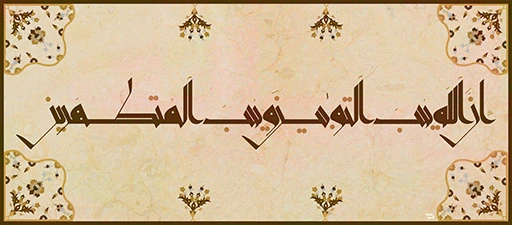
« Indeed, Allah loves those who constantly turn to Him in repentance, and He loves those who purify themselves. »
(Sūrat Al-Baqarah, 2:222).
This noble verse embodies the very spirit of kaffārah in the Qur’an. Allah, Glorified is He, never closes the door of His mercy to those who have made a mistake. On the contrary, He loves those who sincerely return to Him and strive to repair the harm they have caused.
From this, we understand that kaffārah is not an end in itself; rather, it is the practical expression of repentance. Feeding those in need, clothing them, freeing slaves, and, when one is unable to do so, fasting—all these acts transform repentance into a tangible reality that benefits both the individual and society.
The pairing of those who repent (at-tawwābūn) with those who purify themselves (al-mutaṭahhirūn) carries a profound meaning. Repentance purifies the heart from sin, while kaffārah gives visible expression to that purification through righteous deeds and social reform.
Another manifestation of Allah’s mercy is that the laws of expiation are founded upon ease rather than hardship. If a person is unable to carry out the social acts prescribed, the Qur’an provides an alternative through fasting, in accordance with Allah’s words:
« Allah does not burden any soul beyond its capacity. »
(Sūrat Al-Baqarah, 2:286).
The objective is not hardship, but rather that every individual accepts responsibility according to his or her ability.
Conclusion
The Qur’anic laws of expiation reveal a profoundly human and social vision. Their purpose is not primarily to punish the one who has erred, but to reform the individual while contributing to the well-being of society as a whole.
From the Qur’anic perspective, a mistake is not the end of the journey; it can become the beginning of a righteous deed that benefits others and helps relieve their suffering.
This is why acts of expiation are first associated with freeing slaves, feeding those in need, and clothing the poor before fasting is prescribed for those who are unable to perform these social acts.
It thus becomes clear that the Qur’an presents repentance as a path to reform and righteous deeds as the sincere fruit of returning to Allah.
Among the verses that best summarize this teaching is the statement of Allah:
« Indeed, Allah loves those who constantly turn to Him in repentance, and He loves those who purify themselves. »
This divine love is the goal toward which every believer strives: sincere repentance, a purified soul, and beneficial deeds that spread goodness throughout society, making kaffārah a true gateway to mercy, solidarity, and reform.
