
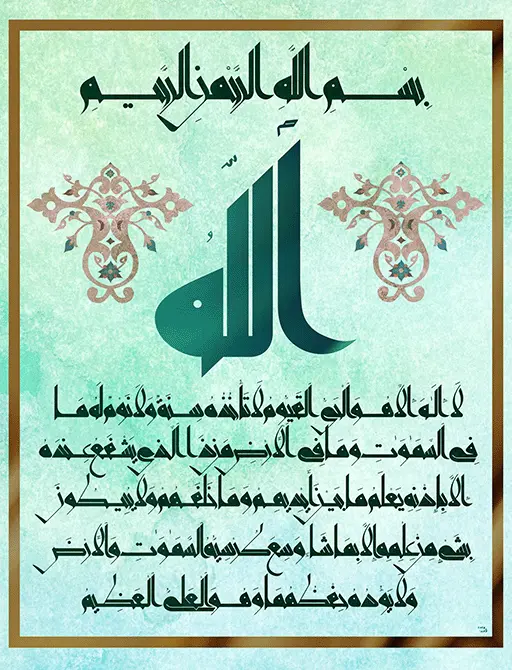
In the name of Allah, the Most Compassionate, the Most Merciful.
All praise belongs to God, Lord of all worlds, whose knowledge encompasses everything, who preserves all things by His wisdom, and who has made His Book a source of guidance and mercy for all humanity.
The concept of preservation (ḥifẓ) is one of the fundamental concepts of the Holy Qur’an. It appears in many different contexts, revealing both an essential aspect of God’s relationship with His creation and the responsibility entrusted to human beings before their Lord.
By reflecting upon the Qur’anic verses, the reader discovers that preservation is not limited to protection from danger. It encompasses the preservation of the universe, the preservation of Divine Revelation, the preservation of human beings, the preservation of their deeds, as well as the believer’s responsibility to preserve God’s limits, His covenant, and the trust placed in them.
The Qur’an uses the terms ḥifẓ (preservation), ḥāfiẓ (protector, guardian), and ḥafīẓ (the One who preserves all things perfectly) with remarkable precision. God is described as the Best Protector, as the One who watches over all things, as the One who has guaranteed the preservation of His Book, and as the One who has appointed angels to protect human beings by His command. In return, the Qur’an praises those who preserve God’s limits and describes the people of Paradise as those who constantly turn back to God and faithfully preserve what has been entrusted to them.
When these verses are brought together and carefully reflected upon, they reveal a comprehensive Qur’anic vision of preservation. Preservation is not only a divine blessing; it is also a sacred trust and a responsibility. Just as every human being hopes to be preserved through God’s mercy, each person is also called to preserve God’s commands and remain faithful to them.
Thus, the relationship between God and the human being is built upon two complementary dimensions: God preserves His creation through His grace and mercy, while human beings are called to preserve God’s commandments through faith, obedience, and faithfulness to the trust they have freely accepted.
📌Part One: God Is the Best Protector
God, Exalted is He, relates the words of the Prophet Jacob:
« He said, ‘Should I entrust him to you any more than I entrusted his brother to you before? God is the Best Protector, and He is the Most Merciful of the merciful.' »
(Surah 12 : Yūsuf, Verse 64)
This verse takes place in a deeply moving human situation. Jacob’s sons asked their father to allow their brother to accompany them. Jacob remembered what had happened to Joseph when he had previously entrusted him to their care. It was then that he declared:
« God is the Best Protector, and He is the Most Merciful of the merciful. »
Jacob did not place his trust in human protection. Knowing the limits, weakness, and inability of human beings, he entrusted the matter entirely to God.
His heart did not become attached to worldly means; instead, it turned toward God, saying:
« God is the Best Protector. »
These words express one of the highest forms of tawakkul—complete trust and reliance upon God. God protects better than parents, better than armies and guards, and better than every means upon which people place their confidence.
Jacob then added:
« And He is the Most Merciful of the merciful. »
Divine preservation is not merely an expression of infinite power; it is, above all, an expression of infinite mercy. Jacob therefore joined preservation with mercy, for the human being needs not only protection, but also the compassion and mercy of the Creator.
This verse teaches that true security is not found in human power alone, but in placing one’s trust in God, whose protection is perfect and whose mercy embraces all creation.
 Part Two: The Preservation of the Heavens and the Earth
God, Exalted is He, says in Āyat al-Kursī (The Throne Verse):
« His Kursī extends over the heavens and the earth, and preserving them does not weary Him. And He is the Most High, the Most Great. »
(Surah 2 : Al-Baqarah, Verse 255)
This verse teaches that preserving the heavens and the earth requires neither effort nor fatigue from God.
Here, the concept of preservation extends far beyond the individual to embrace the entire universe. The heavens, with their stars, galaxies, and perfectly ordered laws, and the earth, with all its creatures, events, and delicate systems, are all preserved by God’s command.
Human beings may sometimes be unable to preserve even the smallest thing. God, however, preserves the whole universe without the slightest difficulty.
In the light of this verse, Jacob’s words take on an even deeper meaning:
« God is the Best Protector. »
The One who preserves the heavens and the earth is surely able to preserve a single human being, a family, a nation, or indeed all of humanity.
God’s preservation is absolute. It knows neither weakness nor limitation nor weariness. It proceeds from His perfect knowledge, His infinite power, and His boundless mercy toward all His creation.

Part Three: God Is the Guardian of the Revelation and the Divine Message
God, Exalted is He, says:
« Indeed, it is We who have sent down the Reminder, and indeed, We are its Guardian. »
(Surah 15 : Al-Ḥijr, Verse 9)
If God preserves human beings, He also preserves what is even more essential for their guidance: the Divine Revelation.
The Holy Qur’an is the Book that God revealed for all humanity. He Himself has guaranteed its preservation so that it will remain intact until the end of time.
This divine preservation is essential because it ensures that God’s Message remains authentic and accessible to every generation. Through it, every human being has the opportunity to know God’s guidance and is therefore accountable before the Creator.
The preservation of the Qur’an is inseparable from the transmission of the Divine Message and from the establishment of God’s proof (al-ḥujjah) before humankind. By preserving His Book, God ensures that no one can claim to have been deprived of His guidance.
This verse reveals one of the greatest manifestations of God’s mercy toward humanity. By preserving the Qur’an, God preserves the truth, the guidance, and the light destined to lead human beings to the straight path.
The preservation of the Qur’an also reminds us that divine guidance is not temporary or limited to a particular people or era. It is a universal message, preserved by God Himself, so that every generation may find in it guidance, mercy, wisdom, and justice.
Part Four: God Watches Over All Things
God, Exalted is He, says:
« Indeed, my Lord watches over all things. »
(Surah 11 : Hūd, Verse 57)
This verse is one of the most comprehensive passages in the Qur’an concerning divine preservation.
The Arabic word Ḥafīẓ (حفيظ) conveys a broader and more profound meaning than ḥāfiẓ (حافظ). It signifies perfect, continuous, and all-encompassing preservation. Nothing escapes God’s knowledge, and nothing lies beyond His preserving care.
God watches over:
 The Entire Universe

The whole universe exists according to the laws established by God. The heavens, the earth, and every creature remain under His preservation and sovereign care. Human Deeds
God says:
« Indeed, there are guardians over you, noble recorders, who know all that you do. »
(Surah 82 : Al-Infiṭār, Verses 10–12)
Not a single word, action, righteous deed, or act of injustice escapes God’s knowledge. Every human deed is preserved so that the Final Judgment will be founded upon perfect justice.
The Qur’an also says:
« They will find everything they did set before them, and your Lord wrongs no one. »
(Surah 18 : Al-Kahf, Verse 49)
The preservation of human deeds is therefore the foundation of divine justice. Every person will see the complete record of what they have done. Provision and the Appointed Term of Life
God says:
« How many creatures are there that cannot provide for themselves! God provides for them and for you. He is the All-Hearing, the All-Knowing. »
(Surah 29 : Al-‘Ankabūt, Verse 60)
The provision of every living creature is known to God and remains under His care.
Regarding the appointed term of life, God says:
« God never delays a soul when its appointed time has come. And God is Fully Aware of all that you do. »
(Surah 63 : Al-Munāfiqūn, Verse 11)
Both provision and the span of life are determined by God’s wisdom and knowledge. Human beings are commanded to strive and work, yet they cannot create their own provision, nor can they advance or delay the time appointed for them. Human Beings Throughout Their Lives
God says:
« For each person there are successive angels before and behind them, protecting them by God’s command. »
(Surah 13 : Ar-Ra’d, Verse 11)
This verse teaches that God has appointed angels to protect human beings by His command.
The angels possess no independent authority; they simply carry out God’s will. This protection reminds us that human life is not governed by chance, but remains under God’s care, wisdom, and mercy. The Greatest Preservation: The Preservation of Guidance
Reflecting upon the stories of the prophets reveals that divine preservation does not always mean being spared from trials.
Joseph was thrown into a well, sold into slavery, and imprisoned. Yet throughout every hardship, God preserved him.
In what way?
God preserved his faith, his integrity, and his guidance, leading him through every trial toward the mission that had been prepared for him.
The same was true of Job. He was tested in his health, his wealth, and his family. Despite the severity and duration of his suffering, he never lost his trust in God and never abandoned the straight path. The greatest gift God preserved for him was his faith and his patience. Deliverance came only after the trial had fulfilled its purpose.
The stories of the prophets therefore teach us that God’s preservation may be manifested in the midst of suffering rather than in its removal.
A person may lose health, wealth, or social status. But the greatest loss is to lose divine guidance.
For this reason, believers pray:
« Our Lord, do not let our hearts deviate after You have guided us, and grant us mercy from Yourself. Truly, You are the Ever-Giving. »
Surah 3 : Āl ʿImrān, Verse 8
The greatest form of preservation is therefore not the preservation of the body, but the preservation of the heart from going astray, so that it remains firmly attached to truth and guided by God.
Part Five: Preserving God’s Limits
After showing how God preserves His creation, the Qur’an turns to the responsibility entrusted to human beings.
God says:
« …those who repent, those who worship God… those who preserve God’s limits. And give glad tidings to the believers. »
(Surah 9 : At-Tawbah, Verse 112)
To preserve God’s limits means to remain faithful to what God has revealed, to observe His commands, and to refrain from transgressing the limits He has established.
The believer therefore does not seek God’s preservation alone; he or she is also called to preserve God’s commandments and to remain faithful to them throughout life.
Part Six: Those Who Constantly Return to God and Faithfully Preserve What Has Been Entrusted to Them
God says:
« This is what you were promised for everyone who constantly turns back to God and faithfully preserves what has been entrusted to them; who stands in awe of the Most Merciful, though unseen, and comes with a heart turned in devotion. »
(Surah 50 : Qāf, Verses 32–33)
These verses unite two remarkable qualities. Awwāb (أواب)
A person who continually returns to God through repentance, prayer, remembrance, and obedience. Ḥafīẓ (حفيظ)
A person who faithfully preserves God’s covenant, His commandments, and every trust that God has placed in their care.
The true ḥafīẓ is therefore not merely someone who safeguards material possessions, but one who preserves faith, protects the heart from deviation, and remains faithful to the guidance of God.
Part Seven: Preserving the Trust Entrusted to Humanity
God says:
« Indeed, We offered the Trust (al-Amānah) to the heavens, the earth, and the mountains, but they refused to bear it and were fearful of it. Yet the human being undertook it. Truly, he has often been unjust and ignorant. »
(Surah 33 : Al-Aḥzāb, Verse 72)
This verse shows that human beings were not created merely to receive God’s preservation and mercy. They were also entrusted with a profound responsibility and are called to preserve and fulfill that trust.
Although the word preservation is not explicitly mentioned in this verse, the Trust can only be fulfilled by safeguarding it faithfully and protecting it from neglect or betrayal.
One of the finest Qur’anic examples of fulfilling this trust is found in the words of the Prophet Joseph:
« Appoint me over the storehouses of the land, for I am trustworthy in safeguarding them and knowledgeable. »
(Surah 12 : Yūsuf, Verse 55)
Joseph combines two essential qualities required for every position of responsibility:
faithful preservation of the trust;
knowledge, which enables that trust to be fulfilled with wisdom and justice.
Preservation protects the trust from loss, while knowledge provides the wisdom needed to administer it properly.
Through reflection upon the Qur’anic verses, we understand that preserving this trust includes:
- preserving God’s limits;
- establishing justice;
- faithfully fulfilling responsibilities and returning trusts to those to whom they belong;
- conveying the truth without concealing it;
- seeking beneficial knowledge and putting it into practice.
This understanding is closely connected with God’s words:
« …those who preserve God’s limits… »
(Surah 9 : At-Tawbah, Verse 112)
and:
« …for everyone who constantly turns back to God and faithfully preserves what has been entrusted to them. »**
(Surah 50 : Qāf, Verse 32)
The believer who faithfully preserves what God has entrusted to them, and who fulfills that responsibility with knowledge, justice, sincerity, and integrity, is among those to whom God has promised His glad tidings.
✨Conclusion
The verses of the Holy Qur’an reveal that **preservation** (*ḥifẓ*) is one of the fundamental concepts that shape the relationship between God and human beings. It is not only a divine blessing, but also a trust entrusted to humanity and a responsibility that each person is called to uphold. God is **the Best Protector** and **the One who watches over all things**. He preserves the heavens and the earth, protects human beings throughout their lives, safeguards His Book from alteration, and preserves every human deed so that the Final Judgment will be established upon perfect justice. Nothing escapes His knowledge or His preserving care. In return, God calls human beings to preserve the limits He has established, to be among those who constantly turn back to Him, and to remain faithful to the trust He has entrusted to them. Preserving this trust requires knowledge, justice, sincerity, integrity, respect for the rights of others, and the faithful fulfillment of every responsibility entrusted by God. The wisdom of this responsibility is beautifully expressed in the words of the Prophet Joseph: > ** »Appoint me over the storehouses of the land, for I am trustworthy in safeguarding them and knowledgeable. (Surah Yūsuf : 12, Verse 55)* These two qualities are inseparable. Knowledge without faithfulness to the trust may lead to injustice, while faithfulness without knowledge may lead to inadequacy. The Qur’an unites qualities in the person of Joseph, presenting a model of responsibility founded upon integrity and competence. Thus, the Qur’anic vision of preservation appears in its fullness: **God preserves human beings through His mercy, while human beings are called to preserve the trust that God has entrusted to them through faith, obedience, and righteous deeds.** When these two dimensions come together, human life can be built upon security, justice, knowledge, and guidance. Perhaps the most beautiful summary of this study is found in the words of the Prophet Jacob: > ** »God is the Best Protector, and He is the Most Merciful of the merciful. »** > > *(Surah Yūsuf, Verse 64)* These words express complete trust in God and the certainty that His mercy is the source of all true preservation. They also remind us that those who faithfully preserve the trust entrusted to them by God walk upon the path of His guidance and His mercy. We pray that God makes us among those who faithfully preserve His limits, fulfill the trust He has entrusted to them, and remain firmly attached to His Book. May He surround us with His preservation and His mercy in this life and in the Hereafter. **All praise belongs to God, Lord of all worlds.